
Wood smoke rules in Launceston and regional Australia: what they mean for your fireplace
Launceston has a 15-year plan to cut wood smoke and health groups want a national approach. Here is what is changing for wood heaters in regional Australia, and how to keep a fire without the smoke.
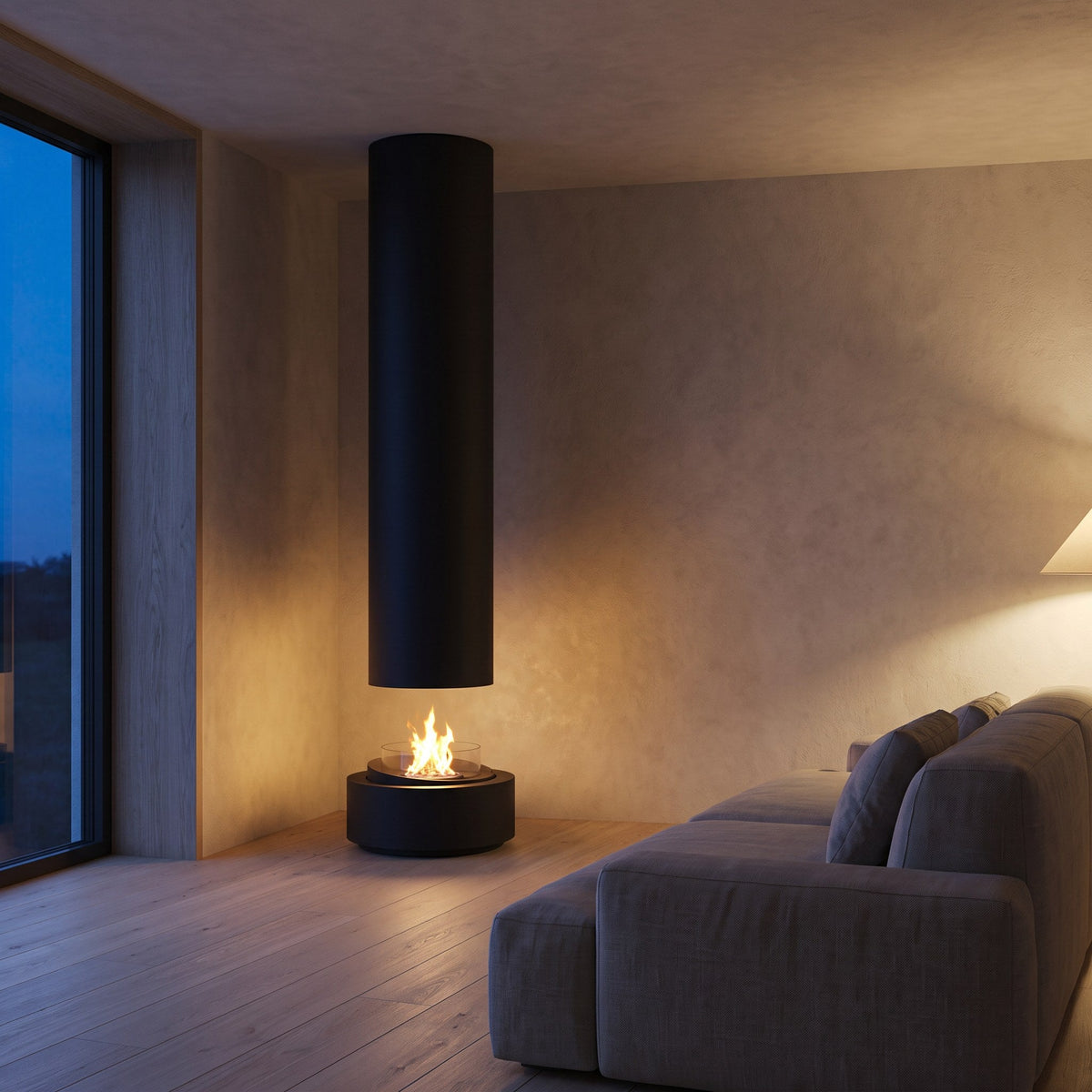
Wood heaters are under pressure across regional Australia. Launceston's council has taken up a 15-year plan to reduce wood smoke, the ACT has a 2045 phase-out goal, and Asthma Australia is calling for a coordinated national approach. If you are building, renovating or replacing an old heater, a bioethanol fire gives you a real flame with no smoke at all.
Launceston's Domestic Wood Smoke Plan
Launceston sits in the Tamar Valley, where cold, still winter nights trap smoke close to the ground. The city exceeded the national daily air quality standard on 20 days in 2025. In 2026 the council put forward a Domestic Wood Smoke Plan with a 15-year horizon:
- Early years: education, air quality monitoring and better data.
- Later years: a possible by-law that could restrict older high-emission heaters, tighten limits on new installations and require some heaters to be upgraded or removed when a house is sold. These steps would need further council approval.
The mayor has said the plan does not aim to ban wood heaters. The council dropped direct replacement subsidies.
The wider picture
- ACT: a goal to phase out wood heaters by 2045, with lease restrictions in some new suburbs. See Canberra's wood heater phase-out.
- National: Asthma Australia has called for coordinated national action on wood smoke ahead of winter 2026, and medical researchers have recommended phasing out wood heaters in urban areas.
The direction is clear even where nothing is yet law: new wood heaters face more conditions, and older ones face more scrutiny.
What this means if you love a fire
If your heater is old, the question is what to replace it with. Reverse-cycle air conditioning heats efficiently but has no flame. A modern compliant wood heater keeps the flame but still makes smoke and needs a flue, firewood and cleaning. A bioethanol fire burns a real flame with no smoke, soot or ash, and needs no chimney.
Many households do both: reverse-cycle for the whole house, and a bioethanol fire in the living room for the flame and the warmth where they sit.
Choosing a fire for a cold Tasmanian winter
For cold climates, look at the higher outputs and match the burner to the room:
- Iconic 900, 5.5 kW, rooms of 90 m³ or more
- Naked Flame Curve 120, 4.4 kW, rooms of 110 m³ or more
- Curve 90, Orbit or Silo, 4 kW, rooms of 90 m³ or more
A bioethanol fire is a heat source for the living area, not whole-house heating. See our size guide.
Delivery to Tasmania
We deliver to your door in Launceston and northern Tasmania and Hobart and southern Tasmania, with freight as a flat rate shown at checkout. We do not install; a suitably qualified person must install the fire to the maker's instructions and Tasmanian building requirements.
Common questions
Is Launceston banning wood heaters?
No. The plan starts with education and monitoring. Tougher steps, such as limits on older heaters or removal at sale, are possible later and would need further council approval.
Does a bioethanol fire make smoke?
No. Bioethanol burns to heat, water vapour and carbon dioxide, with no smoke, soot or ash.
Can I keep my old chimney?
You do not need it. A suspended bioethanol fire hangs where it suits the room and does not use a flue for exhaust.
Sources: Pulse Tasmania (August 2026), City of Launceston, Asthma Australia (May 2026), InSight+ (June 2026).