
Bioethanol, Gas, Wood or Electric: Choosing the Fuel for a Suspended Fire
How bioethanol, gas, wood and electric suspended fires compare on heat, installation, consent and the rooms they suit, with the numbers for each Naked Flame model.
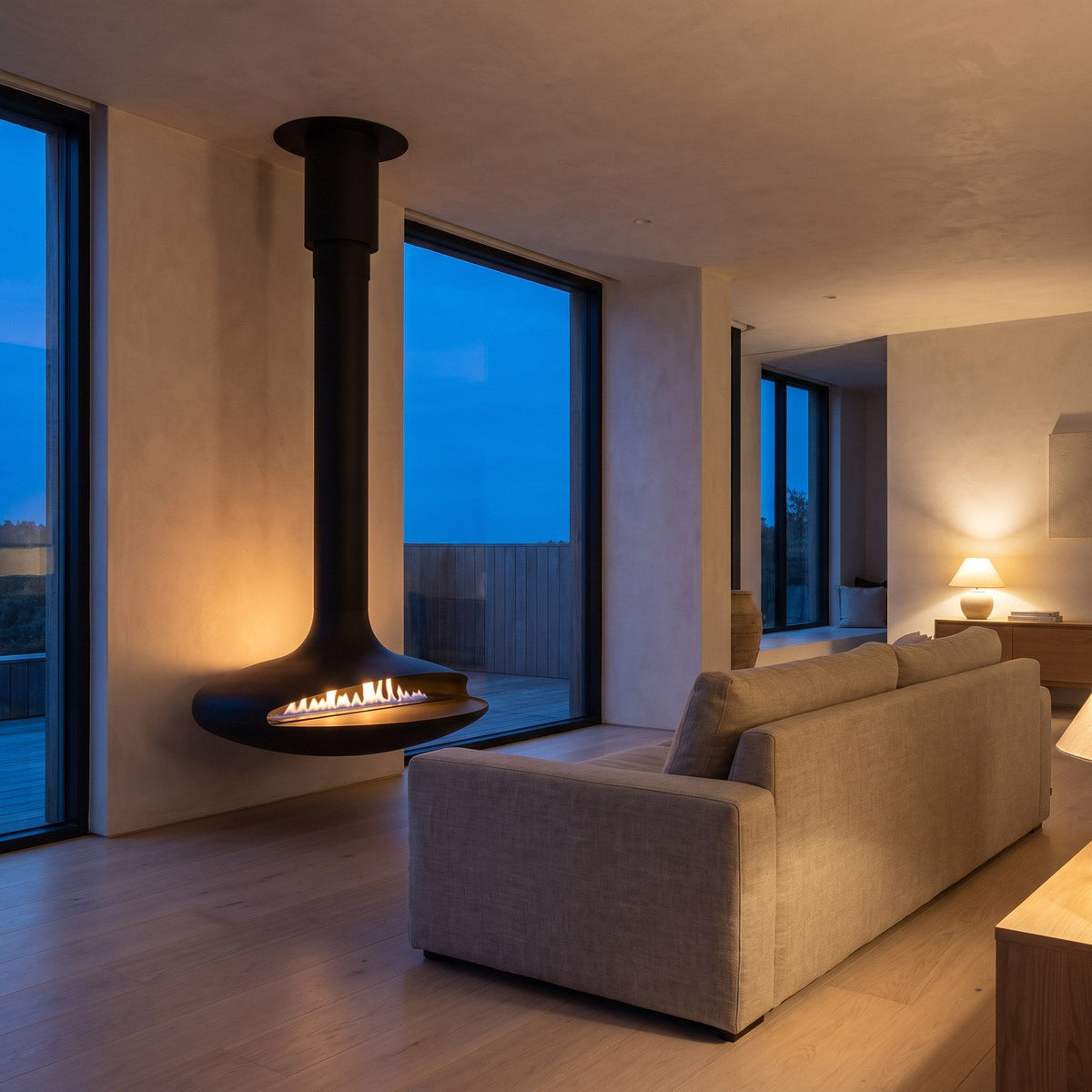
Most Naked Flame fires can be built for any of four fuels: bioethanol, gas, wood or electric. The shape and finish stay the same, but the fuel changes how the fire is installed, what consent you need and how it behaves in the room. Here is how they compare.
The Sphere, Silo, Orbit, Curve 90 and Curve 120 are available in all four. The Cocoon Aeris, Iconic 900 and Pillar are bioethanol only.
Bioethanol
Bioethanol is the simplest way to get a real flame. It needs no chimney and no gas line, so it suits renovations and apartments where running a flue through the roof is not practical. The fire still hangs on its own steel flue, which carries it from the ceiling and keeps its form.
Each model uses a burner sized to its firebox:
- Sphere: XL500 burner, 5 L tank, 3.35 kW, 10 to 13 hours a fill, rooms of 80 m³ or more
- Silo, Orbit and Curve 90: XL700 burner, 7 L tank, 4 kW, 9 to 12 hours a fill, rooms of 90 m³ or more
- Curve 120: XL900 burner, 9 L tank, 4.4 kW, 8 to 13 hours a fill, rooms of 110 m³ or more
- Cocoon Aeris: 1.5 L tank, 3 kW, up to 5 hours a fill, with no flue at all
The minimum room size matters. A bioethanol fire burns in the room, so the space needs to be big enough for the burner you choose. Use bioethanol made for fireplaces, and only refuel once the flame is out and the burner is cold. Read more on how bio fires work and safety.
Gas
A gas burner is fitted at the factory and installed to AS/NZS 5601.1 by a licensed gasfitter, with the flue venting out through the roof. You get a steady flame at the turn of a switch and no refilling. The trade-off is installation: you need a gas supply and a roof penetration, and gas versions are fixed in place, so they do not rotate on the flue the way the other fuels do.
Wood
The wood version is an open-fronted fire, the most traditional of the four, with real logs and the sound and smell that come with them. It is installed as an untested appliance under AS/NZS 2918 and needs building consent. Open-fronted wood fires are not allowed in many New Zealand urban areas, so check with your council before you order. For rural and lifestyle properties where it is permitted, it is the most elemental option in the range.
Electric
The electric version uses an electric flame insert, powered from a power point in the ceiling space, with the lead running up inside the flue. Like bioethanol, it needs no chimney or gas line. It is the easiest to live with day to day, and a good fit where open flame is not an option.
What stays the same
Whatever the fuel, every Naked Flame suspended fire hangs on a 219 mm steel flue cut to your ceiling height, with fittings for flat or pitched ceilings. The suspension bracket fixes into the ceiling framing, and that structure must hold 350 kg to allow for swing. Bioethanol, wood and electric versions turn 360 degrees on the flue. Each fire is handcrafted in black powdercoat, corten, brushed or polished stainless steel.
Which one is right for you
- No chimney, quick to install: bioethanol or electric
- Constant heat with no refilling: gas
- A traditional log fire where your council allows it: wood
- No open flame at all: electric
If you are building or renovating, bring your architect or installer in early so the fuel, ceiling structure and flue can be planned together. Our fuel options page and technical specs have the details, or see the fires in person at our showroom at 72 Barrys Point Road, Takapuna.

Explore the suspended fireplace collection
Talk to our team about your project