
Bioethanol vs gas fireplace in Australia: which suits your home?
Gas gives more sustained heat but needs a gas line and a flue. Bioethanol needs neither, which is why it suits apartments, renovations and homes moving off gas.
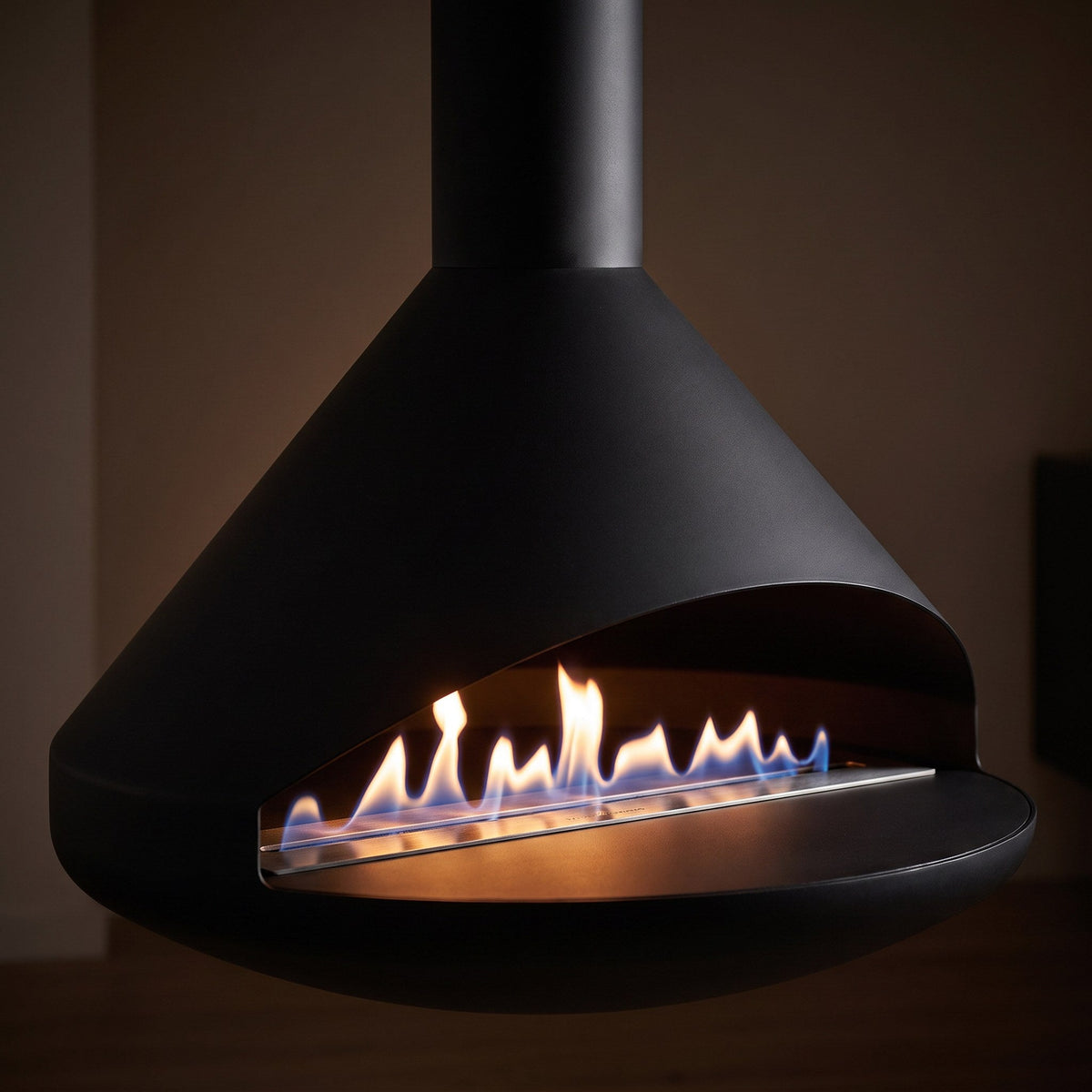
Choose gas if you want sustained whole-room heating and already have a gas connection and a way to flue it. Choose bioethanol if you want a real flame without a gas line, flue or chimney, for example in an apartment, a renovation, or a home moving off gas. Every suspended fire we deliver to Australia is bioethanol.
Side by side
| Bioethanol | Gas | |
|---|---|---|
| Gas line | Not needed | Needed |
| Flue or chimney | Not needed | Usually needed |
| Installer | Qualified installer for the fixing | Licensed gasfitter plus installer |
| Heat | 3 to 5.5 kW in our range | Typically higher and sustained |
| Fuel | Liquid bioethanol, refuelled by hand | Mains or bottled gas |
| Best for | Apartments, renovations, homes off gas | Primary heating in homes with gas |
Where bioethanol wins
- No roof penetration. Nothing goes through the roof, so a hanging fire works where a flue cannot.
- Moving off gas. Many Australian households are taking gas out. Bioethanol keeps a real flame without it.
- Placement. A hanging bioethanol fire can sit in the middle of the room, not just against an external wall.
Where gas wins
- Heat output over long periods. If the fire is your main heating in a cold climate, gas delivers more sustained heat.
- No refuelling. Gas runs from the supply; bioethanol is refuelled by hand once the burner is out and cold.
Safety with bioethanol
Use fuel made for fireplaces, refuel only when the flame is out and the burner is cold, keep the room ventilated and respect the minimum room volume for the burner. Decorative ethanol burners sold in Australia must meet the national safety standard for decorative alcohol fuelled devices. Read our safety guide.
See the bioethanol suspended fireplaces we deliver to Australia.